

Therapy Intensives in Washington, D.C., Virginia & Maryland
If you've been showing up to weekly therapy for months, or years, and still feel stuck, you're not alone. Therapy intensives were designed for exactly this reason.

Therapy intensives are longer, focused therapy sessions that can last anywhere from 90 minutes to several hours, a full day, or even multiple days. They're an opportunity to work with trauma, anxiety, perfectionism, relationship patterns, or whatever has been keeping you stuck, without feeling like we're racing against the clock.
And they're not just for people who've spent years in therapy without getting anywhere.
Some people want dedicated time to process a specific experience. Others find that once they've settled into a session, they're only just beginning to access what matters when it's time to leave. For neurodivergent clients, that extra time can make a real difference. And sometimes life simply doesn't accommodate another weekly appointment.
At Full Self Psychotherapy, we integrate EMDR, Internal Family Systems (IFS), somatic therapy, and relational work into our intensives. We offer them as standalone experiences, alongside weekly therapy, or as part of ongoing treatment.
Whether you're tired of stopping just as you're getting somewhere, have something specific you want to work through, or simply need a format that works better for your brain and your life, there's room to do therapy differently.
You're in the right place!

How a Therapy Intensive Is Different From Weekly Therapy
The 50-minute weekly session model was built around insurance reimbursement schedules, not around what the brain and body need to heal. In a standard session, you often spend the first 10 minutes getting settled, the last 10 realizing you've hit something important, and the middle 30 only beginning to scratch the surface. Then you leave, activated but unresolved, and wait another week.
In a therapy intensive, there is no forced stop. When you reach the root of something important, you have the time and relational safety to stay there, work through it, and move toward resolution in the same session. This is especially significant for trauma processing, where interruptions can leave the nervous system in an incomplete state.
Key differences:
- Duration: Intensives run 90 minutes to 5 hours, compared to the standard 45 to 55 minute session
- Depth: Extended time allows access to material that is often too protected to surface in brief weekly contact
- Momentum: Condensed format reduces the re-entry cost of starting and stopping each week
- Efficiency: What takes months in weekly therapy may be achievable in one or several intensives, depending on your goals
- Flexibility: Intensives can be scheduled as a standalone experience or as a complement to ongoing weekly therapy with another provider

Who Benefits From Therapy Intensives?
You don’t need to be in crisis to benefit from an intensive. Many of our clients are functioning well in their lives but are tired of feeling stuck in the same patterns.
An intensive might be a good fit for you if:
-
You’re ready to go deeper
- Weekly therapy feels like it ends just when you’re getting somewhere
- You’re working through trauma, PTSD, or complex trauma and 45 or 60 minutes doesn’t feel like enough
- You understand your anxiety, perfectionism, self-doubt, or other patterns pretty well by now. Understanding them just hasn’t changed them.
- You’ve done talk therapy and want to try deeper work with EMDR, IFS, and somatic therapy
-
Weekly therapy doesn’t fit what you need
- Your schedule makes weekly appointments difficult, but you can carve out a longer block of time
- You already have a therapist and want focused EMDR or trauma work alongside your ongoing therapy
- Something significant is happening in your life and you want more than 45 minutes at a time to work through it
-
More time actually helps you
- You’re neurodivergent, including ADHD or autistic, and it takes time to settle in before you can really get into the work
- You’re a veteran or military professional looking for focused support around trauma or the transition out of service
Intensives can range from extended sessions to half- and full-day therapy intensives. Virtual intensives are also available for clients throughout Washington, D.C., Virginia, and Maryland.
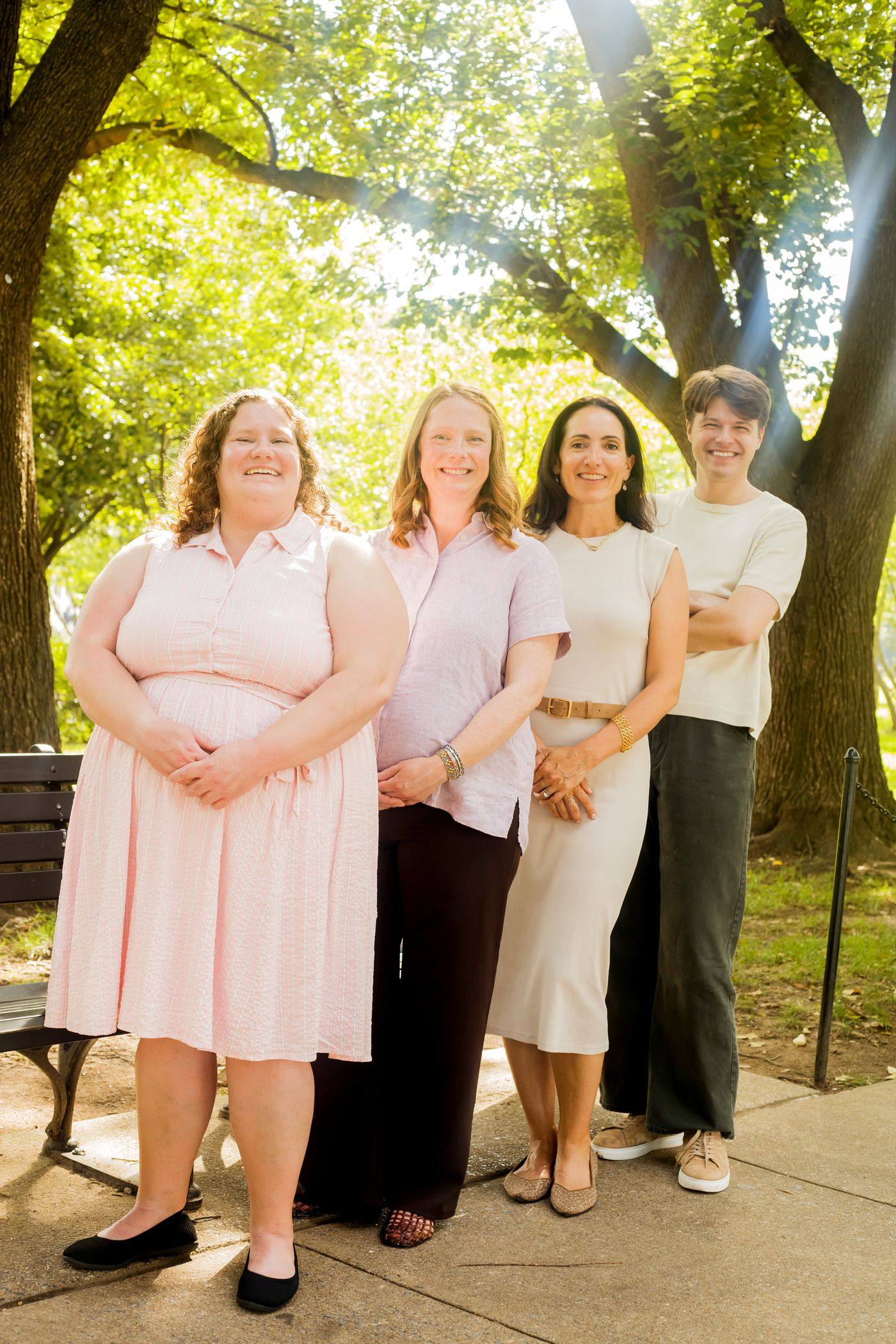
Approaches We Use: EMDR, IFS & Somatic Therapy
At Full Self Psychotherapy, our intensives integrate evidence-based, body-and-brain-informed approaches that are specifically suited to deep-dive work. These three modalities can be used individually or in combination depending on your goals, history, and what emerges during your intensive. We customize every intensive to the person. There is no one-size-fits-all protocol.
We love using these approaches in our practice, and we love using them together even more. Working with EMDR, IFS, and somatic therapy in an intensive session format allows us to go even faster and deeper.
Schedule a Free ConsultationEMDR
Eye Movement Desensitization and Reprocessing is a structured trauma processing method that uses bilateral stimulation (i.e. eye movements, light buzzing stimulation, or tapping) to help the brain reprocess distressing memories so they no longer carry the same emotional charge. EMDR intensives are particularly effective for PTSD, single-incident trauma, and anxiety rooted in specific past experiences.
The extended time of an intensive allows for more complete processing cycles than a 50-minute session permits. We recommend at least 90 minutes per EMDR session. Shorter sessions risk opening up deep material without enough time to reach a natural stopping point, which can leave you feeling dysregulated between sessions.
Internal Family Systems (IFS)
IFS is a parts-based approach that helps you identify and work with the different internal voices, beliefs, and protective strategies that often drive self-doubt, perfectionism, and emotional reactivity. IFS intensives create the space to go deep with individual parts rather than briefly checking in with them. The extended time allows something rare: the parts that have been protecting you the longest actually get to be heard, without the clock forcing them back underground.
Somatic Therapy
Somatic therapy is a body-centered approach that integrates movement, sensation, and body awareness into the therapeutic process. It's particularly effective for working with trauma that's stored in the nervous system and body rather than in conscious narrative memory. The kind of stuck that feels physical even when nothing in your story explains it. The intensive format allows for the slower, more attuned pacing this somatic work requires.
Our somatic work draws on Sensorimotor Psychotherapy (Margot has completed Levels 1 and 2) and Somatic Experiencing, which Brendan integrates into his work.
How Our Therapy Intensives Work
A therapy intensive is a focused, extended session designed to help you dive deep into your healing without the usual constraints of weekly therapy. Instead of spreading the work over months, an intensive allows us to work more efficiently in a condensed timeframe, helping you gain clarity and relief more quickly. Here's how it typically works:
-
Initial Consultation and Planning
Before scheduling your intensive, we'll meet for a consultation to discuss your goals, current challenges, and whether an intensive is the right approach. Together, we'll determine the order of your goals and we'll provide a recommendation for the length and structure of your intensive that is realistic and fits your schedule. This might be a one-time 3-hour session next week, a full 5-hour day, or shorter 90-minute sessions every other week, depending on your needs and schedule.
-
Extended, Focused Sessions
Therapy intensives range from 90 minutes to a full day (5 hours), with breaks as needed to support regulation. During this time, we use evidence-based, brain-and-body-based modalities like EMDR, IFS, and Sensorimotor Psychotherapy to process stuck patterns, resolve past trauma, and create lasting shifts.
-
A Personalized Approach
Unlike a standard therapy session, intensives allow us to follow your process without having to pause just as you're getting to the root of something. This uninterrupted time supports deeper work and a more natural resolution of emotional material. We absolutely LOVE the immersive quality of intensives, and witnessing tangible shifts happen for our clients in just one session.
-
Integration and Follow-Up
Healing doesn't stop when the session ends. At the end of session or in-between sessions, you'll receive personalized integration strategies to help you absorb and apply what we've worked on, and we'll discuss next steps for continued support, whether that's additional therapy or self-guided practices.
Many people find that an intensive can jump-start their healing, break through stuck patterns, or provide relief from issues that have felt unmovable. If you're curious about whether this could be the right approach for you, please reach out!
The Power of Therapy Intensives
Why we're so passionate about this deep work
Our therapists love intensives because we do the damn thing. No more stopping just as we're getting to the real work. We dive in, and you actually feel the shift happening in real time. It's deep, immersive, and SO much more effective than chipping away in 45-minute increments. We follow your process instead of the clock, which means breakthroughs that might have taken months happen in hours.
And what does that actually look like? Therapy intensives can help you have:
-
A clearer, calmer mind.
Say goodbye to racing thoughts and the constant mental chatter. You'll feel more present and in control, instead of stuck in your head.
-
More emotional openness.
If you've been feeling numb or disconnected, you'll start feeling your emotions again, making it easier to connect with others.
-
More trust in yourself (and others).
Overcome self-doubt and rebuild trust, so you can make decisions with confidence and feel safer in your relationships.
-
A body that feels safe.
Chronic tension and that “on edge” feeling will ease up, so you can start to feel more relaxed in your own body.
-
Better relationships.
As you heal, you'll find it easier to set healthy boundaries, communicate more openly, and build deeper, more fulfilling connections with the people around you.
It's an honor to observe our clients come in tense, unsure, or overwhelmed and leave feeling lighter, clearer, and more connected to themselves. We love seeing the relief when something that's felt stuck for years finally moves. And yes, intensives are an investment, but they're worth it. The time, the depth, the transformation. You're not just paying for longer sessions, you're paying for real change, faster.
If you're ready, we're ready.
Schedule a Free ConsultationWhat Are the Intensive Fees?
Packages
We offer one-day intensive packages ranging from 90 min to 5 hrs. Book a consult to find the best structure for you!
Cost
| Session Length | Margot (LICSW, LCSW-C) | Naomi (LICSW, LCSW-C) | Molly & Brendan (LMSW, LGSW) |
|---|---|---|---|
| 90-minute intensive | $580 | $550 | $460 |
| Half-day intensive (3 hours) | $1,160 | $1,100 | $920 |
| Full-day intensive (5 hours) | $1,935 | $1,835 | $1,535 |
Sessions scheduled outside standard business hours (9am to 5pm) or on weekends incur a 25% surcharge.
Payment plans are available. We are happy to discuss fee options during your consultation.
Insurance: Therapy intensives are often only modestly covered by insurance. We recommend reaching out to your insurance to inquire more about coverage for out-of-network benefits.
Let Us Show You How Intensive Therapy Is More Effective and Efficient Than Weekly Therapy
Please note that the names and stories presented here are entirely fictional and are composites.
Jess (Weekly Therapy Sessions)
Cost: $840 for 4 weekly sessions (45 mins each)
Jess is a 35-year-old working mom, struggling with anxiety, perfectionism, and self-doubt. She feels overwhelmed balancing her job, family, and her own needs, and she's frustrated with the slow pace of therapy. She wants more progress but has a tough time finding time for herself.
- 1 therapy session per week, each lasting 45 minutes
- 15 minutes spent on updates, check-ins, and closing
- 30 minutes spent on deep processing
Total Processing Time: In Jess's 4 weekly sessions, only 30 minutes of each session (on average) are spent on actual deep processing, totaling around 120 minutes (2 hours) of deeper work per month. Sometimes, she misses sessions or progress just feels slow, and Jess finds herself revisiting the same issues week after week.
Jess feels like she's not getting enough time to make real breakthroughs.
Not Ideal for EMDR: Weekly sessions aren't ideal for EMDR, which requires uninterrupted time to process trauma.
Cori (Therapy Intensive)
Cost: $920 for 1 intensive 3-hour session
Cori is a 32-year-old entrepreneur and caregiver dealing with anxiety and creative blocks. They tried traditional therapy and found it hard to maintain with their busy schedule and still felt stuck. They booked an intensive, looking for faster, more effective progress.
- 1 intensive session, lasting 3 hours
- No time spent on small talk or check-ins
- 3 hours spent on deep processing, including EMDR and other techniques
Total Processing Time: In one 3-hour intensive session, Cori spends all 3 hours focused on deep work. With no interruptions, they're able to process significant trauma or emotional blocks, resolving issues that would take weeks or months in traditional sessions.
Cori's 3-hour session allows them to fully immerse in their work.
Perfect for EMDR: Therapy intensives are ideal for EMDR, which requires more extended, uninterrupted time to be fully effective.
If you're frustrated by slow progress or struggling to balance therapy with your busy life: Therapy intensives offer a focused, powerful approach to healing. With more time to address deep issues in one session, you'll experience breakthroughs and lasting change, while also working around your schedule. Whether it's overcoming anxiety, perfectionism, or creative blocks, therapy intensives give you the space to fully heal.

Change Can Happen Faster Than You Think.
The right person for a therapy intensive is someone who is ready: not perfect, not crisis-free, but genuinely ready to commit focused time and attention to their own healing. You don't need to have done years of therapy first. You don't need a clear sense of exactly what you want to work on. You just need a genuine desire to move and a willingness to stay with what comes up.
If you're not sure whether an intensive is the right approach, our free consultation is designed to answer that question with you, not for you.
Schedule a Free ConsultationIn-Person Therapy Intensives in Washington, D.C.
In-person therapy intensives are available at our Washington, D.C. office in Dupont Circle, serving clients in the District, Northern Virginia, and Maryland. Our Dupont Circle location offers a private, comfortable environment designed to support the depth and focus of intensive work.
In-Person Therapy for Teens
Supporting teens and adolescents at our Dupont Circle office in Washington, D.C., with in-person sessions available across the DMV area.
Learn More About Teen TherapyIn-Person Therapy for Adults
In-person individual therapy for adults at our Dupont Circle office, with flexible scheduling Monday to Saturday from 8am to 7pm.
Learn More About Adult Therapy
Virtual Therapy: Healing From the Comfort of Home
Life is busy, and carving out time for therapy can feel like just another stressor. That's why we offer virtual therapy, a flexible, accessible option designed to fit seamlessly into your routine.
Imagine settling into your favorite chair, a warm drink in hand, your pet by your side, and starting your session from the privacy of your own space. Many clients find it easier to open up when they're in a familiar environment, free from the pressures of commuting or worrying about being seen at a therapy office.
Virtual therapy offers all the same benefits of in-person sessions, with added convenience and confidentiality. Your sessions will be held over a secure, HIPAA-compliant video platform, ensuring your privacy and safety every step of the way.
Learn More About Virtual TherapyFrom the blog
Read more about therapy intensives on our blog
 Therapy Intensives
I've Done Therapy. Why Do I Still Feel Stuck? How Neurofeedback and Intensive Trauma Therapy Can Work Together
June 15, 2026
 ADHD
What to Expect in a Therapy Intensive: A Neurodivergent-Friendly Approach to Deep Work Without the Wait
February 3, 2026
 EMDR
Why EMDR Works Best in Relationship, and Why Intensives Can Be the Most Ethical Way to Do the Work
January 27, 2026
 ADHD
What Makes a Therapy Intensive ADHD-Friendly? Key Features That Actually Work for Neurodivergent Brains
September 16, 2025
 Therapy Intensives
Can I Keep My Current Therapist and Still Do a Therapy Intensive?
August 25, 2025
 ADHD
The Hidden Costs of ADHD: How Therapy Intensives Can Save You Time, Money, and Self-Esteem
July 22, 2025


FAQs About Therapy Intensives in Washington, D.C.
How Is a Therapy Intensive Different From Regular Therapy?
A therapy intensive is a focused, deep-dive approach where you spend 90 minutes or more in a single session to make faster, more meaningful progress. Unlike traditional weekly therapy, intensives give you the time and space to explore your challenges more deeply, addressing the root causes of issues like perfectionism, self-doubt, anxiety, and creative blocks, or processing acute traumas such as an accident or an assault. With extended sessions, we go beyond surface-level problems, helping you break through patterns that regular therapy may not reach. If you're frustrated with slow progress, intensives offer a powerful, focused way to create lasting change.
How Does Intensive Therapy Work?
A therapy intensive is a focused, extended session designed to help you dive deep into your healing without the usual constraints of weekly therapy. Instead of spreading the work over months, an intensive allows us to work more efficiently in a condensed timeframe, helping you gain clarity and relief more quickly. Here's how it typically works:
- Initial Consultation and Planning: Before scheduling your intensive, we'll meet for a consultation to discuss your goals, current challenges, and whether an intensive is the right approach. Together, we'll determine the order of your goals and we'll provide a recommendation for the length and structure of your intensive. This might be a one-time 3-hour session next week, a full 5-hour day, or shorter 90-minute sessions every other week, depending on your needs and schedule.
- Extended, Focused Sessions: Therapy intensives range from 90 minutes to a full day (5 hours), with breaks as needed to support regulation. During this time, we use evidence-based, brain-and-body-based modalities like EMDR, IFS, and Sensorimotor Psychotherapy to process stuck patterns, resolve past trauma, and create lasting shifts.
- A Personalized Approach: Unlike a standard therapy session, intensives allow us to follow your process without having to pause just as you're getting to the root of something. We absolutely LOVE the immersive quality of intensives, and witnessing tangible shifts happen for our clients in just one session.
- Integration and Follow-Up: Healing doesn't stop when the session ends. At the end of session or in-between sessions, you'll receive personalized integration strategies to help you absorb and apply what we've worked on, and we'll discuss next steps for continued support, whether that's additional therapy or self-guided practices.
Many people find that an intensive can jump-start their healing, break through stuck patterns, or provide relief from issues that have felt unmovable. If you're curious about whether this could be the right approach for you, please reach out!
Why Should I Do a Therapy Intensive?
If you're tired of feeling stuck in endless weekly sessions, a therapy intensive could be the game-changer you need. In 90 minutes or more, you and your therapist will dive into those nagging issues like self-criticism, burnout, anxiety, or trauma symptoms that have been holding you back. This isn't about dragging things out. It's about making real progress in less time. Ready to break through those barriers and start moving forward? Therapy intensives give you the focused time to make it happen.
Are Therapy Intensives Backed by Research?
There's SO much research that supports the effectiveness of intensives.
Intensives prove to be effective for PTSD, enabling faster symptom reduction with similar, or even better, results, while reducing the risk that patients drop out prematurely. Learn more here and here.
Intensive EMDR treatment is feasible and indicative of reliable improvement in PTSD symptoms in a very short time frame. Learn more here.
Compared to other trauma therapy, the intensive format may decrease treatment time, thus reducing cost. Learn more here.
Can Therapy Intensives Be Used With EMDR, IFS, and Sensorimotor Psychotherapy?
Yes, therapy intensives can absolutely be used with EMDR, IFS, and Sensorimotor Psychotherapy, and this combination makes the process that much more effective. The extended time allows us to go deeper, faster, and truly dive into the heart of your issues. With EMDR, we recommend at least 90 minutes to allow for deeper processing in one session. Using the traditional 45-minute model can slow things down, requiring multiple reopenings of trauma processing, which can feel frustrating. Therapy intensives help you move through your healing faster and more efficiently!
How Do I Know if I'm a Good Match for an Intensive Session?
If you're feeling stuck in the same old loop, whether it's perfectionism, self-doubt, anxiety, creative blocks, or PTSD symptoms, and you're over it, an intensive could be just what you need. If you're motivated to actually make progress, break through those frustrating patterns, and want something more than traditional therapy, then you're a strong candidate! Therapy intensives are for people who are ready to roll up their sleeves, dive in, and create real change, not just talk about it. So, if you're done with “just getting by,” let's get started!
Intensives can also be especially helpful if you're looking to process a more acute or specific experience, such as a sexual assault, car accident, or other distressing event that still feels unresolved or “stuck” in your system.
What if I Don't Have the Stamina for an Extended Session?
It's completely normal to wonder if you'll have the stamina for an extended session! Many clients are surprised by how quickly the time flies, and we feel that way too. The focused, intentional nature of intensives helps keep the work engaging and meaningful. We'll take breaks as needed, and our therapists will adjust the pace to match what feels right for you. Clients often finish feeling a sense of clarity and accomplishment, saying they got far more out of the time than they expected. Our goal is to make the process feel manageable and supportive from start to finish.
Does Insurance Cover This?
Insurance may cover a portion of the cost, depending on your out-of-network benefits. While we're an out-of-network provider, many clients are able to receive partial reimbursement by submitting a detailed invoice (superbill) to their insurance company. We recommend checking with your provider to understand your out-of-network mental health benefits and what's required for reimbursement. If you have questions about the process, we're happy to help guide you through it and provide the documentation you'll need!
What Can I Expect to Accomplish in a 3-Hour Intensive?
In a 3-hour intensive, you can expect to make meaningful progress on specific issues. For example, we might fully process a traumatic event or association, such as feeling that you need to be perfect to be accepted, struggling with the belief that everything is your fault, or dealing with the impact of past rejection or criticism. While we may not fully resolve every issue in this time, you'll make great headway in understanding and working through these emotions, challenging negative beliefs, and practicing coping strategies.
For clients experiencing Complex PTSD, starting with intensives can be especially valuable to build a strong foundation of self-regulation techniques and experiential somatic exercises. It's important to note that Complex PTSD often requires continued treatment, and many clients benefit from regular half-day or full-day intensives to support long-term growth and progress.
What Can I Expect to Accomplish From a Full-Day (5-Hour) Intensive?
In a 5-hour intensive, you can expect to accomplish deep and significant progress on complex issues. This extended time allows for thorough processing of one or more traumatic events or associations, such as navigating the impact of feeling unworthy of love, struggling with trust issues after betrayal, dealing with the lingering effects of critical or dismissive relationships, or processing an assault. You'll have the space to work through challenging emotions, challenge negative beliefs, and practice new coping strategies. We'll also use experiential somatic exercises to support self-regulation and help integrate what you're learning.
While meaningful healing can happen in one day, Complex PTSD often requires ongoing work to fully address deeper trauma. Many clients find that regular half-day or full-day intensives help support lasting growth and keep them moving forward on their healing journey.
How Should I Prepare for and Plan My Day Around an Intensive Session?
To get the most out of your intensive session, here are some tips for planning your day:
- Block out as much of the day as possible: Clear as much of your schedule as you can, especially if you're a parent or have other responsibilities.
- Prioritize self-care: Plan for a lighter schedule before and after the session. Stay hydrated, eat a balanced meal, and avoid heavy foods right before the session.
- Expect continued processing: Emotional and mental processing often continues for up to three days after an intensive. Give yourself time to rest and integrate the experience.
- Create a comfortable environment: If your session is virtual, set up a quiet space where you feel safe and focused.
- Allow time for reflection: Take time after the session to journal or go for a walk and process what came up.
Follow Us on Instagram
Practical ideas, reflections, and a look at the real people behind the practice. @fullselfpsychotherapy